Fatemeh Ekhtesari
A factual briefing concerning the sustained harassment and smear campaign targeting Iranian poet and translator Fatemeh Ekhtesari, poet Mehdi Mousavi, and people and organisations associated with their work.
Why this page exists
For more than a year, Fatemeh Ekhtesari and Mehdi Mousavi have been subjected to a sustained campaign of online attacks and direct approaches to organisations, venues, journalists, publishers and people associated with their work.
Fatemeh has been targeted both in her own right and through her professional association with Mehdi, including her work as translator and cultural editor of The Last Kiss.
The campaign has repeatedly sought to damage professional relationships and create pressure around public events and literary work.
This page does not ask anyone to accept an account on trust. Its purpose is to distinguish established facts from unsubstantiated allegations, provide independent sources and make relevant documentation available to organisations and journalists who need to assess the matter for themselves.
Who is Fatemeh Ekhtesari?
Fatemeh Ekhtesari is an Iranian poet, writer and translator whose work has addressed censorship, women's lives, political repression and freedom of expression.
She became part of Iran's postmodern ghazal literary movement and was active in independent literary circles before her arrest.
After imprisonment and sentencing in Iran, she fled the country and later relocated to Norway through the ICORN Cities of Refuge programme.
In Norway she has continued to write, publish and perform. She is also the translator and cultural editor of Mehdi Mousavi's bilingual poetry collection The Last Kiss.
Arrest, imprisonment and sentence in Iran
Fatemeh Ekhtesari's arrest and prosecution in Iran are extensively documented by international media and freedom-of-expression organisations.
She and Mehdi Mousavi were arrested in 2013 and detained in Evin Prison, including periods of solitary confinement and interrogation.
Fatemeh was subsequently sentenced to eleven and a half years in prison and 99 lashes. Contemporary documentation connects the prosecution to her poetry, publishing and literary activity, including charges concerning expression, religion and the state.
Her imprisonment and sentence therefore form part of a well-documented record predating the current campaign by many years.
Arrested
Fatemeh and Mehdi were arrested and detained in Evin Prison.
Prison sentence
Fatemeh was sentenced to eleven and a half years in prison.
Corporal punishment
She was also sentenced to 99 lashes.
Flight from Iran
She later fled Iran and eventually relocated to Norway through ICORN.
Contemporary reporting
Poets lobby Iran to pardon pair convicted of insulting religion
Contemporary reporting on Fatemeh and Mehdi's convictions and sentences.
Read source ↗Iran: Poets' Sentencing Signals New Low
Contemporary documentation of the charges, detention and sentences.
Read source ↗Iran: Ekhtesari and Moosavi
Norwegian PEN's contemporary appeal concerning the two writers.
Read source ↗Pattern of the harassment campaign
The campaign targeting Fatemeh and Mehdi has operated through a combination of social-media activity and direct approaches to people and institutions associated with their work.
Activity has repeatedly intensified around public events, publications and other professional appearances.
Claims have also changed over time. Preserved material shows differences in emphasis and presentation depending upon the organisation being approached, while the seriousness of the accusations has escalated.
In a number of cases, individuals presenting themselves as credible sources have made claims about identity, affiliation, relationships or events that reveal significant inconsistencies when checked against publicly available information.
Activity around public work
Activity has repeatedly intensified around events, publications and professional appearances.
Pressure on third parties
Organisations, venues, journalists, publishers and professional partners have been contacted directly.
Changing allegations
The presentation and emphasis of accusations have changed and escalated over time.
Verifiable inconsistencies
Publicly available information has revealed inconsistencies in some identities, affiliations, timelines and accounts.
What is established
The campaign has now continued for more than a year, creating a substantial documentary record of its methods, timing and attempts to influence professional relationships.
The campaign is documented
Communications, posts, screenshots and approaches to third parties have been preserved.
Professional work has continued
Fatemeh has continued to publish, translate, perform and participate in literary and educational work throughout the campaign.
No known event cancellation
No event known to us has been cancelled or professional collaboration ended on the basis of the campaign.
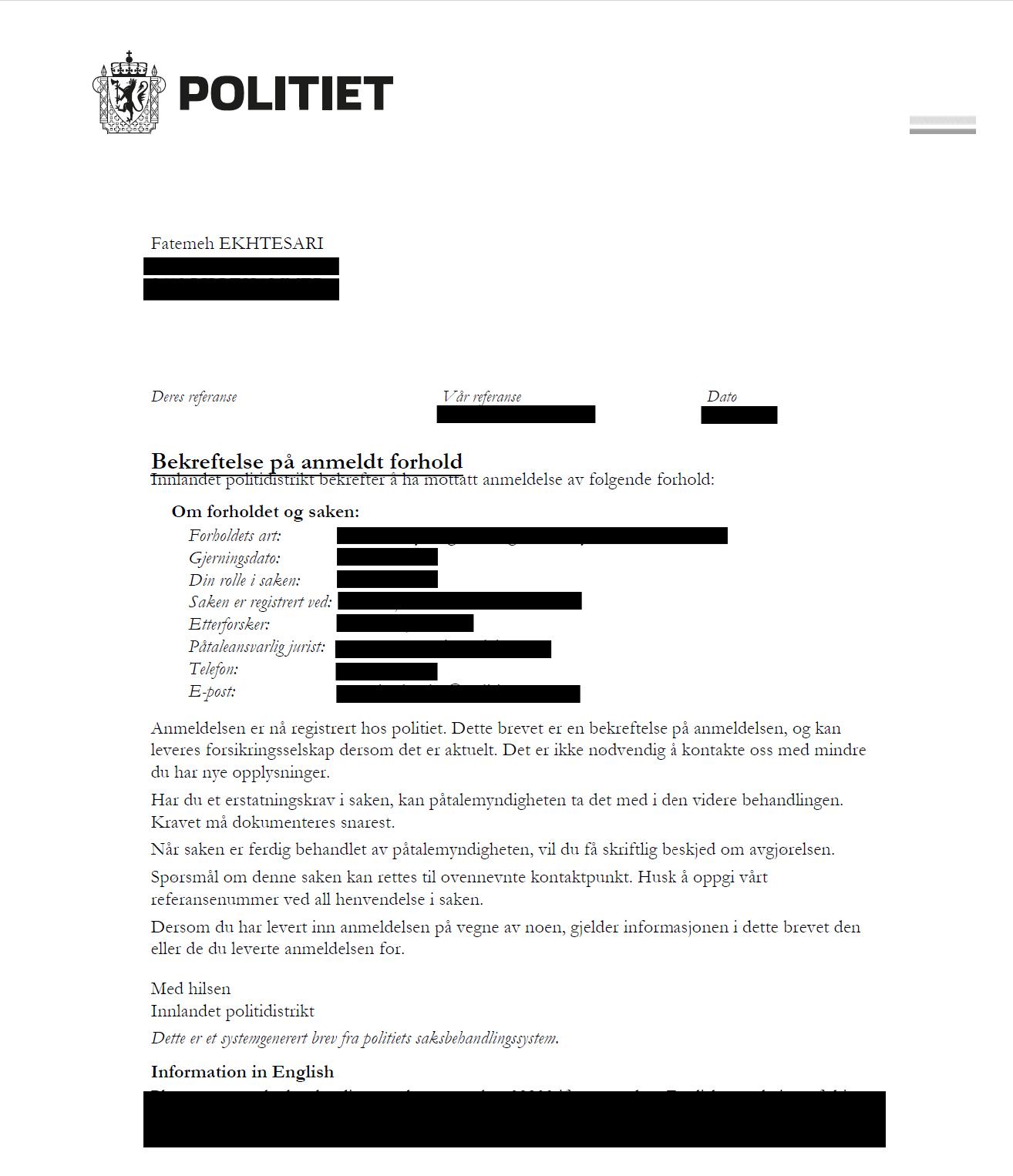
The harassment has been reported
Relevant material concerning the wider campaign has been provided to Norwegian authorities.
Police and security authorities
The wider harassment campaign targeting Mehdi Mousavi, Fatemeh Ekhtesari and people associated with their work has been reported to the relevant Norwegian authorities.
Evidence including communications, screenshots and other documentation has been preserved.
Material can be provided to appropriate organisations and journalists where necessary, while private information and material relevant to ongoing police or security work will not be published publicly.
A documented pattern of transnational repression
Writers, activists and critics of the Iranian authorities living outside Iran can remain subject to pressure after leaving the country.
Norwegian and international organisations have documented surveillance, intimidation, information manipulation and reputational attacks among the methods associated with transnational repression.
This wider context is relevant when assessing a sustained campaign against Iranian writers in exile. It does not by itself establish the origin of this particular campaign.
Iran and transnational repression
National Threat Assessment 2026
PST's assessment of Iranian intelligence activity and pressure on dissidents in Norway.
Read source ↗Iran: Transnational Repression
Research into methods used against Iranian dissidents and journalists abroad.
Read source ↗Public work has continued
Throughout the period of the campaign, Fatemeh has continued to write, publish, translate and take part in literary and educational events.
Her work includes her own poetry as well as the translation and cultural editing of Mehdi Mousavi's The Last Kiss.
Attempts to create professional isolation therefore exist alongside an extensive and continuing public record of literary work and institutional collaboration.