SAFE Pack for Activists
Practical security tools for people working under repression.
The SAFE Pack is being developed with activists, writers, human-rights groups and publishers to help people communicate, organise and protect their work where the internet is monitored, censored or shut down.
It is open-source, not-for-profit and designed around real risks faced by people under pressure.
Three tools. One security system.
In simple terms, the SAFE Pack combines a secure phone, a portable secure computer on a USB drive, and an optional off-grid communicator.
Together they are designed to give people several ways to continue working when ordinary communications are unsafe, censored or unavailable.
The pack is not intended to be a one-size-fits-all product. Partner organisations can adapt the hardware, software, training and content to the needs and risks of individual users.
The core systems are functional and are being refined through testing with activists and human-rights organisations.
A hardened phone for everyday use
The phone is configured to reduce unnecessary exposure of sensitive information while still functioning as a normal smartphone.
It provides encrypted communications, secure internet access and separated working environments so that sensitive material does not need to sit alongside ordinary personal activity.
The exact configuration can be adapted to the individual user and operating environment.
Technical details
- Separate profiles for everyday and sensitive use
- Encrypted storage
- Security and recovery procedures
- Pre-configured VPN, DNS and censorship-circumvention tools
- Signal and secure email
- Secure web browsing
- Hardened device configuration
If a device is seized
The pack includes procedures for protecting sensitive information if a device is lost, searched or confiscated.
The appropriate response depends on the user's threat model, device configuration and local circumstances. Training is therefore treated as part of the system rather than an optional extra.

Carry your working environment with you
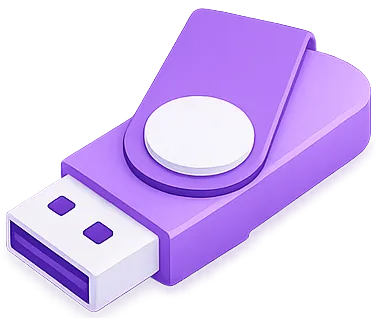
The USB contains a portable operating system that can run on compatible computers without relying on the computer's normal operating system.
It can include secure communications, writing and publishing tools, encrypted storage, Tor and other censorship-circumvention software.
Because it is configurable, the same system can also carry offline libraries, educational material and specialist software appropriate to the user's work.
Technical details
- Portable operating environment
- Tor and censorship-circumvention tools
- Encrypted storage
- Secure communication tools
- PGP support
- Writing, publishing and organisational software
- Offline resources can be added for individual users
Why a portable system?
A portable operating environment allows a user to carry their working system separately from the computer itself.
This can also provide access to familiar security and productivity tools when using different compatible computers.
Communication without the internet
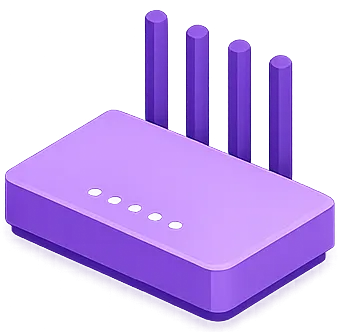
The optional radio component provides another communications path when internet or mobile networks are unavailable.
Using low-power LoRa hardware and compatible mesh software, messages can be passed between participating devices without relying on conventional telecommunications infrastructure.
It is intended as a resilient backup channel, not as a replacement for normal internet-based communications.
How it works
LoRa radios can communicate over distances of several kilometres depending on terrain, hardware and conditions.
With multiple participating devices, messages can be relayed through a mesh rather than depending upon a single internet or mobile connection.
When it may be useful
- Internet shutdowns
- Mobile-network disruption
- Local coordination where conventional networks are unavailable
- Emergency communication
Security works best when people understand it
The SAFE Pack is not simply a collection of devices.
Training is part of the system because security tools are only useful when people understand what they protect against, what they do not protect against, and how their own behaviour affects risk.
Training can be adapted to the needs of individuals and organisations and may cover areas such as:
- safer communications;
- passwords and account recovery;
- device seizure and loss;
- phishing and social engineering;
- censorship circumvention;
- secure file storage and sharing;
- separating personal and sensitive activity;
- assessing digital and physical risk.
The aim is not to turn every user into a security specialist. It is to give people enough understanding to make informed decisions when circumstances change.
Access when the internet is filtered
Governments increasingly use blocking, filtering, throttling and shutdowns to restrict access to information and communications.
The SAFE Pack can include tools such as Tor, Snowflake, VPNs and alternative DNS configurations, selected according to the environment in which the user is working.
No circumvention technique can be guaranteed to remain available indefinitely. The approach is therefore to provide several options and help users understand when each may be appropriate.
What is Snowflake?
Snowflake is a censorship-circumvention system developed as part of the Tor Project.
It allows volunteers outside censored networks to provide temporary proxy connections that can help users reach the Tor network.
Why include several methods?
Internet controls change quickly. A method that works in one country, on one network or during one period may later be blocked.
The SAFE Pack can therefore include several censorship-circumvention tools rather than relying upon a single service.
Built with the people who face the risks
The SAFE Pack is being developed around practical experience rather than an abstract model of digital security.
Feedback from activists, writers, human-rights organisations and people working under censorship helps determine what belongs in the pack, what needs simplifying and what training is required.
“Security tools need to be simple enough to use when people are tired, frightened or under pressure.”
“The strongest system is not necessarily the most complicated one. It is the one people can understand and actually use.”
“People should know what a tool protects them from — and where its limits are.”
Questions about the Pack
Security advice should include limitations as well as capabilities. These are some of the questions that come up most often.
Is the SAFE Pack a finished commercial product?
No. It is an open, collaborative project being developed and tested with people and organisations working in high-risk environments.
The intention is that configurations can be adapted rather than forcing every user into the same setup.
Is the Pack completely secure?
No security system can honestly promise complete protection.
The SAFE Pack is designed to reduce specific risks, provide safer alternatives and help users understand the limitations of the tools they use.
Does everyone receive the same hardware and software?
Not necessarily.
A journalist, poet, human-rights organisation and activist network may face very different risks. Hardware, software, training and offline resources can therefore be adapted to the situation.
Does the radio work without the internet?
Yes. Compatible LoRa devices can exchange messages without ordinary internet or mobile networks.
Range and reliability depend on terrain, hardware, antenna placement, network density and local conditions.
Can the USB work on any computer?
No. Compatibility depends on the computer and its firmware and hardware configuration.
The system is intended for compatible machines and should be tested before it is relied upon in a high-risk situation.
Is the project open source?
The project is built around open-source software and transparent, auditable technologies wherever practical.
Documentation and configurations can be shared so that partner organisations are not dependent upon a proprietary service.
Can organisations help develop or test it?
Yes. We are particularly interested in collaboration with activists, digital-security specialists, human-rights organisations, researchers and groups supporting people affected by censorship and repression.
Help us build the SAFE Pack
We want the system to be shaped by people who understand the environments in which it may be used.
We are interested in hearing from activists, technologists, researchers, publishers, human-rights organisations and groups supporting communities under repression.
That might mean testing a configuration, contributing technical knowledge, identifying weaknesses, developing training or helping us understand a particular operating environment.
mail@safeactivists.org